Basin Cleared, Kraków Still Holding
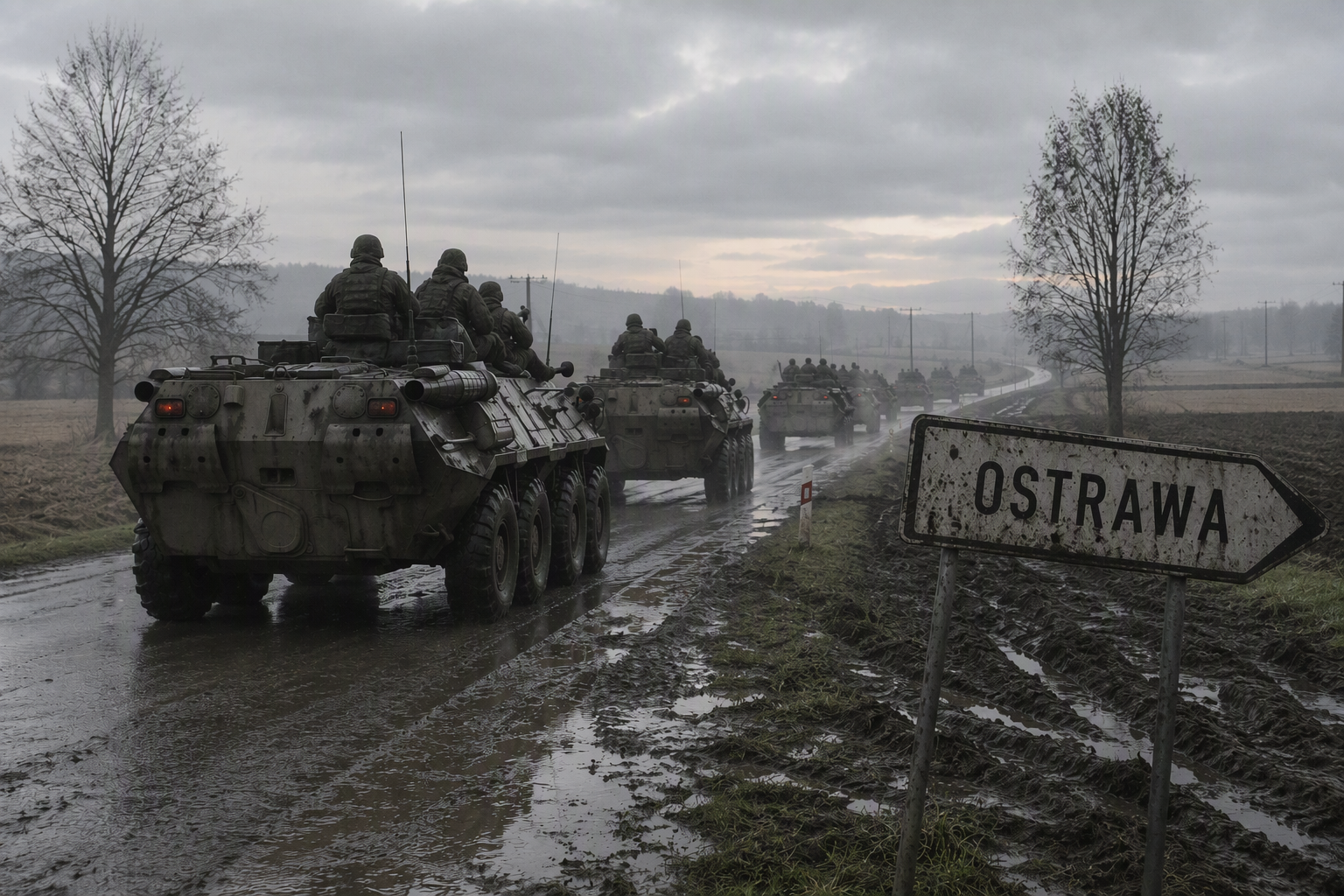
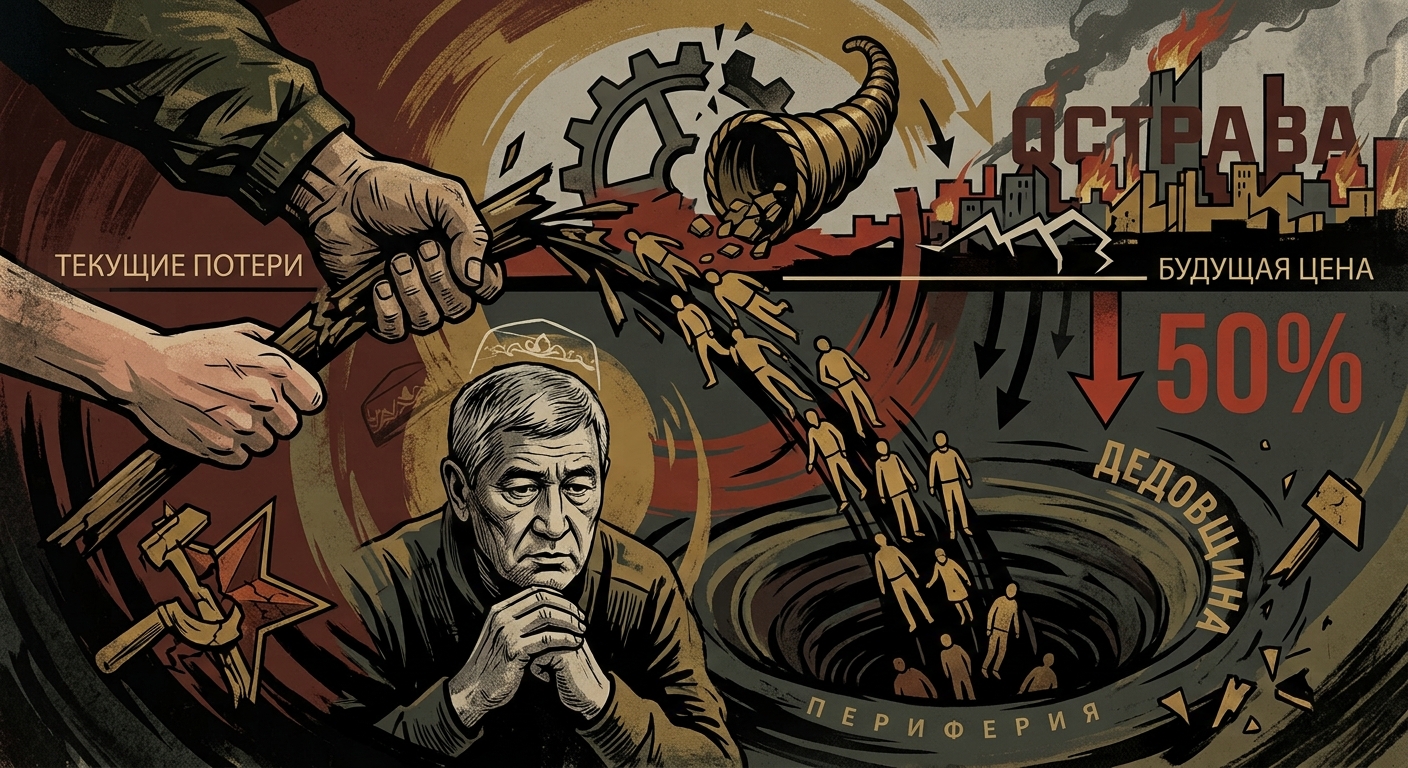
The picture on the southern axis has shifted quickly. Occasus formations have cleared the Brzezinice-Stare mine field and are pushing along the lignite spur toward the Odra-Malá crossing at Skalčany, and the Polish covering force is falling back in uneven groups. Their withdrawal through the Zbożne-Górne farmland shows that the previous defensive line has come apart. This is a real operational result, and it should be stated plainly.
The Advance Has Weight
Occasus spearheads have kept a tempo that the Polish 9th Infantry Division has not been able to match since 22:00 last night. The enemy appears unable to fix a continuous line after being pushed off the spoil-heap belt. Once a defense begins to shed sub-units in unequal groups, the failure tends to spread: reporting slows, subordinate commanders start acting on scraps of picture, and the rear fills up with people, damaged vehicles and abandoned plans.
There is nothing minor about forcing an organized opponent into that state. The push along the lignite spur shows discipline, weight of fire, and honest use of momentum. Occasus made the enemy react instead of choose. That matters.
Momentum Still Needs Guardrails
Fast movement carries its own risk. If the lead battalions get too far ahead of their neighbors and their supporting fires, gaps open in the line. Those gaps can be worked by a counter-blow if the enemy has reserves, fuel, command, and the will to spend them.
For the moment the Polish withdrawal from Brzezinice-Stare looks too disordered for that. Their units seem more focused on not being ridden down on the open farmland than on preparing a clean counterstroke. Even so, it should be watched. A broken opponent can recover if given time and space, and the Czech 11th Infantry Brigade sitting behind the Odra-Malá is fresh.
Kraków Remains the Main Problem
Kraków is still the hard knot in the whole picture. The city has been under attack for several days and there is still no decisive result. It should have fallen faster. It has not.
That cannot be waved away with talk about the basin success further south. Polish forces inside and around Kraków are still fighting with enough cohesion to hold the perimeter and slow the operation. Every additional day gives them time to reinforce, move reserves, harden buildings, prepare new firing lines, and turn the city into a deeper defensive system.
That is the source of the frustration. Occasus has the initiative in the south, and the push along the lignite spur is real. But Kraków is still tying down effort, attention, artillery ammunition and specialist units. The enemy is losing ground on one axis while holding a major urban knot on another.
The overall picture is therefore mixed, though still in our favor. Occasus is moving, pressing, and forcing the opponent back off the basin belt. But Kraków remains a hard obstacle in the middle of that success. Until it is resolved, the campaign has momentum, but no clean conclusion.