The debt owed to the dead at the lignite pit
The reckoning after the storming of the Brzezinice-Stare mine field
The guns above the Brzezinice-Stare open-cast pit only fell silent around four in the morning. But the silence that took their place over the spoil heaps is heavier and more terrible than the fiercest artillery preparation — because it hangs over the rows of tarpaulin-covered bodies at the field casualty collection point.
Let me say it plainly, because no one in the offices upstairs will dare write it down: the price of this night is monstrous. In the 402nd Mechanized Assault Battalion, of four hundred and sixty men, one hundred and ninety-three were still fit for duty by dawn; the composite company from the 407th, sent to clear mines from the northern approach to the No. 3 shaft cage, stopped answering the radio entirely before first light. These are not lines in a sanitary statistic that will cycle back from rear hospitals in six weeks. These are gutted battalions lying now in wrecked trenches between the spoil heaps, holding a strip of worked-out waste rock that was paid for six times over what it was worth.
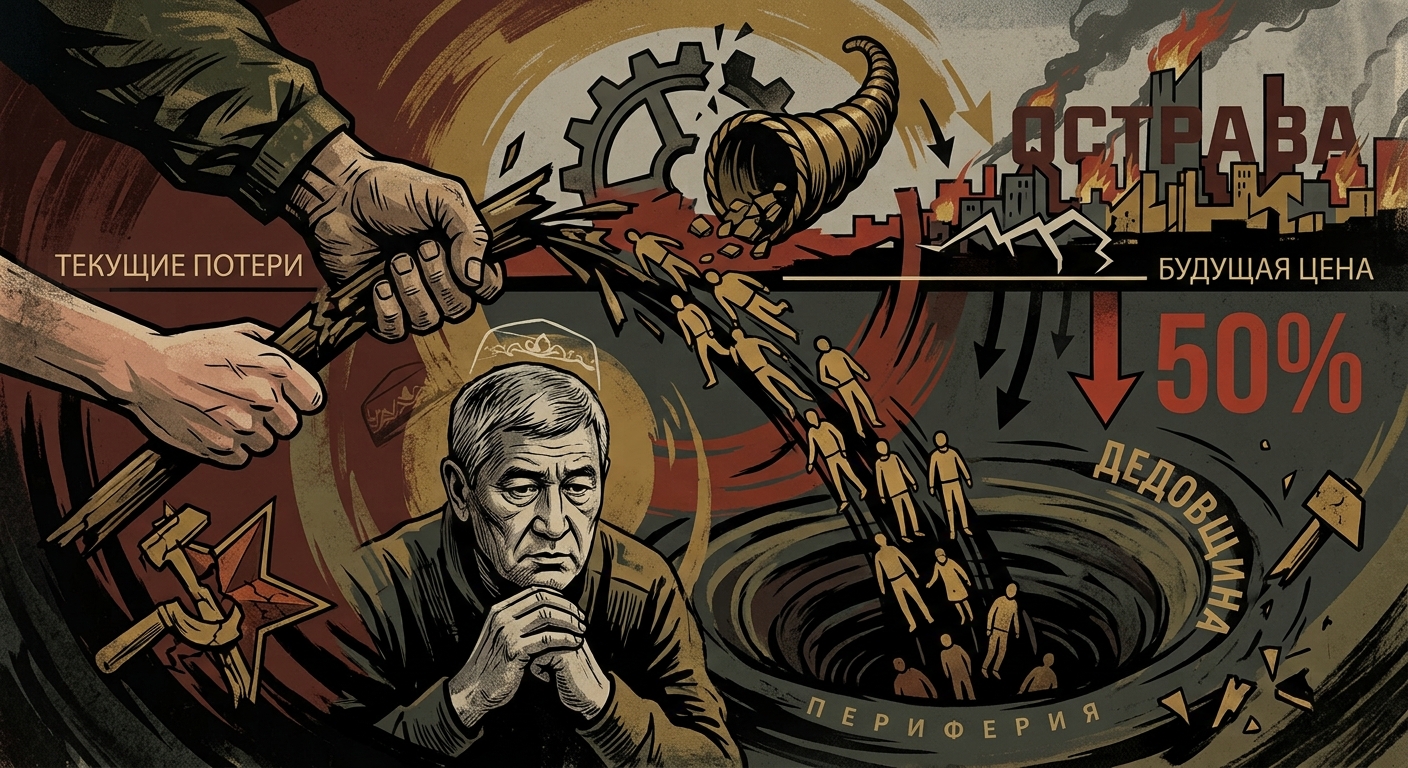
Worst of all is who paid this bill. Take the personnel rolls of the 402nd and 407th and look where these boys were called up from: mountain villages above the Sulak in Dagestan, hunting settlements at the headwaters of the Lena, auls behind the Gimry ridge where the bus runs twice a week. It was they who went in the first wave through the minefields toward the conveyor gallery of the pit. In a mountain village of sixty households, losing a dozen young men means the school will close for good, the flocks will go unshepherded next winter, and weddings will cease for five years to come. Their future was burned into Polish coal dust before they ever reached the border stone.
And in the rear, where discipline should be rebuilt, the old rot has bloomed again — dedovshchina. Exhausted platoon leaders look the other way while broken “old-timers” from the spring intake take their bitterness out on eighteen-year-olds. This is not toughening; it is decay from within. In the army I served in, brotherhood and iron discipline kept us alive against a real enemy; what I am seeing right now in the rear camps at Lipník Ždárný is not military pride, but the ugly collapse of desperate men biting their own.
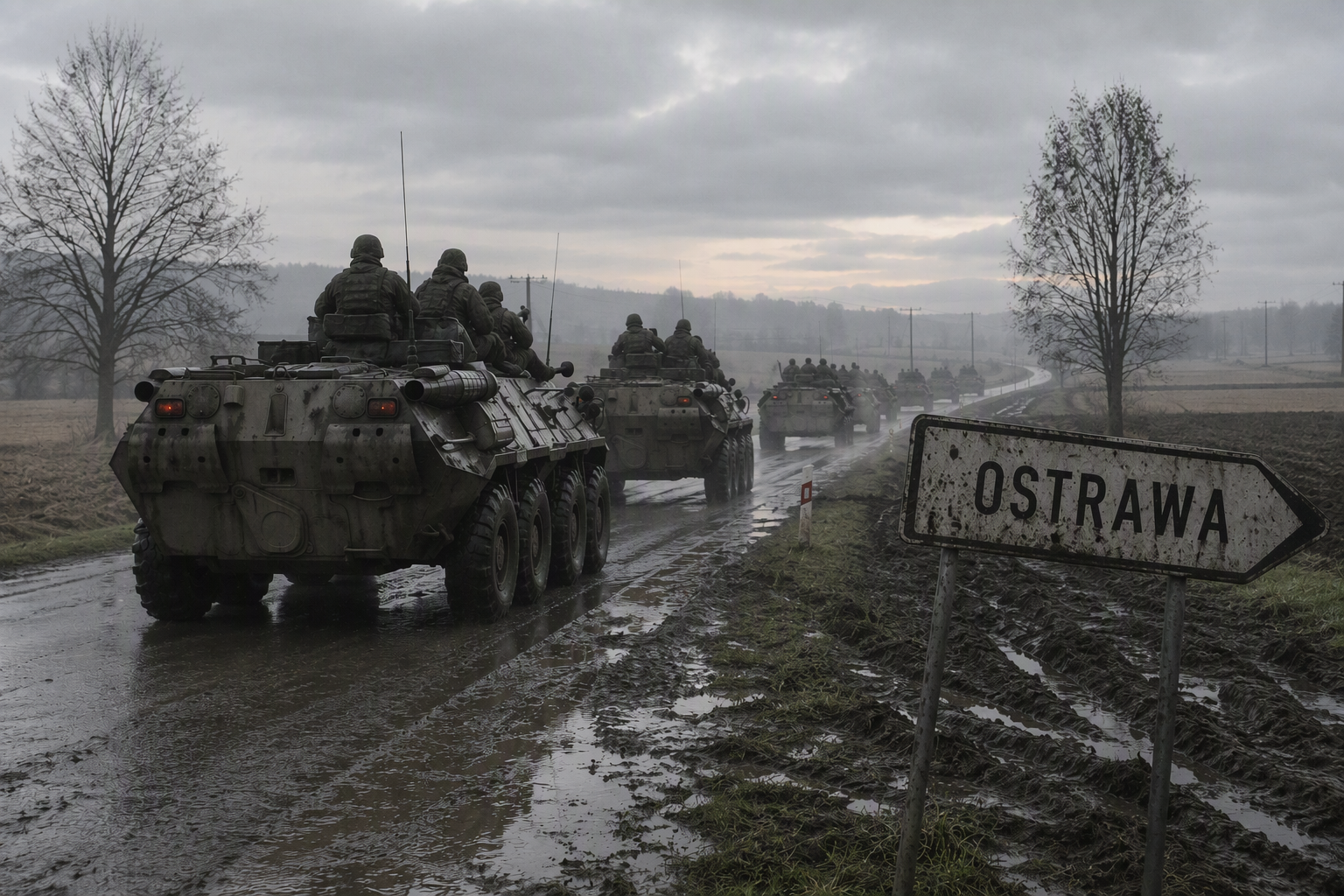
And past the checkpoint wire at the Odra-Malá crossing, the Czechs and the road to Ostrava are already waiting for us.
They are dug in, they are receiving reinforcements by rail, and they know we are coming. Taking the crossing at Skalčany, and Ostrava behind it, may look like a glorious line on a staff officer’s acetate, but at the current rate we will make that road only by scraping the very bottom of our mountain periphery and our arctic settlements. If, to force the Moravian Gate, we spend the last young men of Dagestan and Yakutia — what do we bring home? Occupied land cannot save a nation that hollowed out its own soul and murdered its own youth to get there.