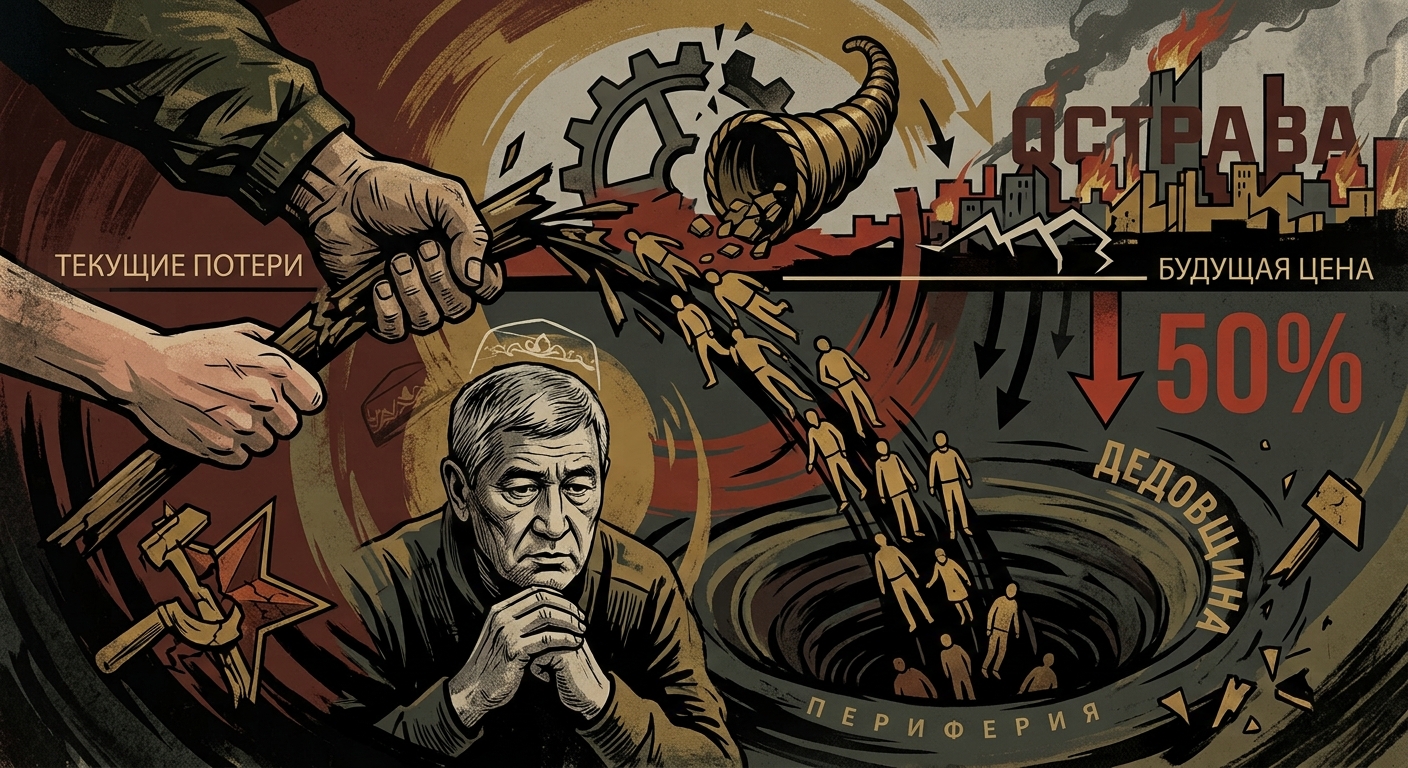
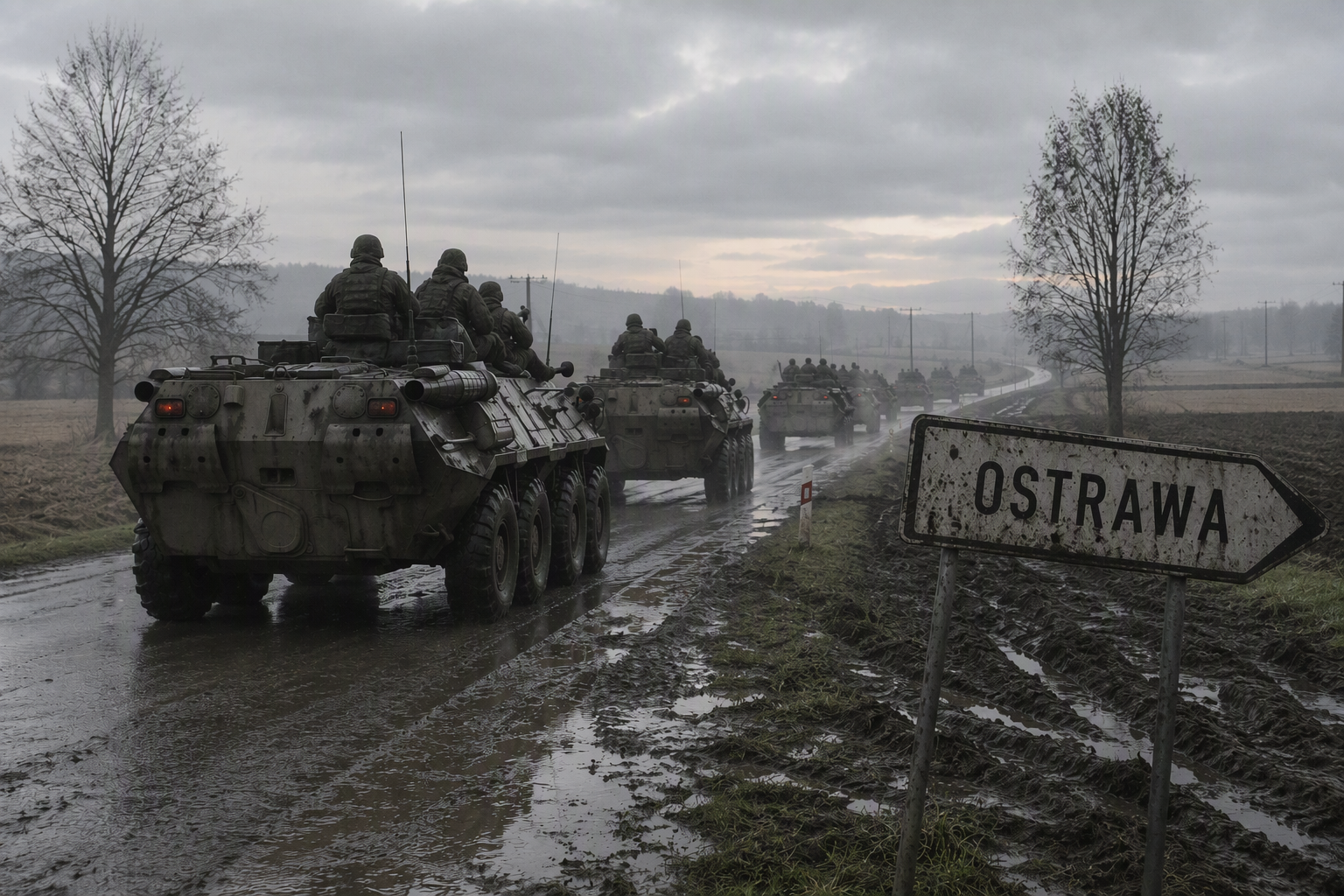
Rybnik salient: Tactical Deconstruction \& Strategic Risk Analysis
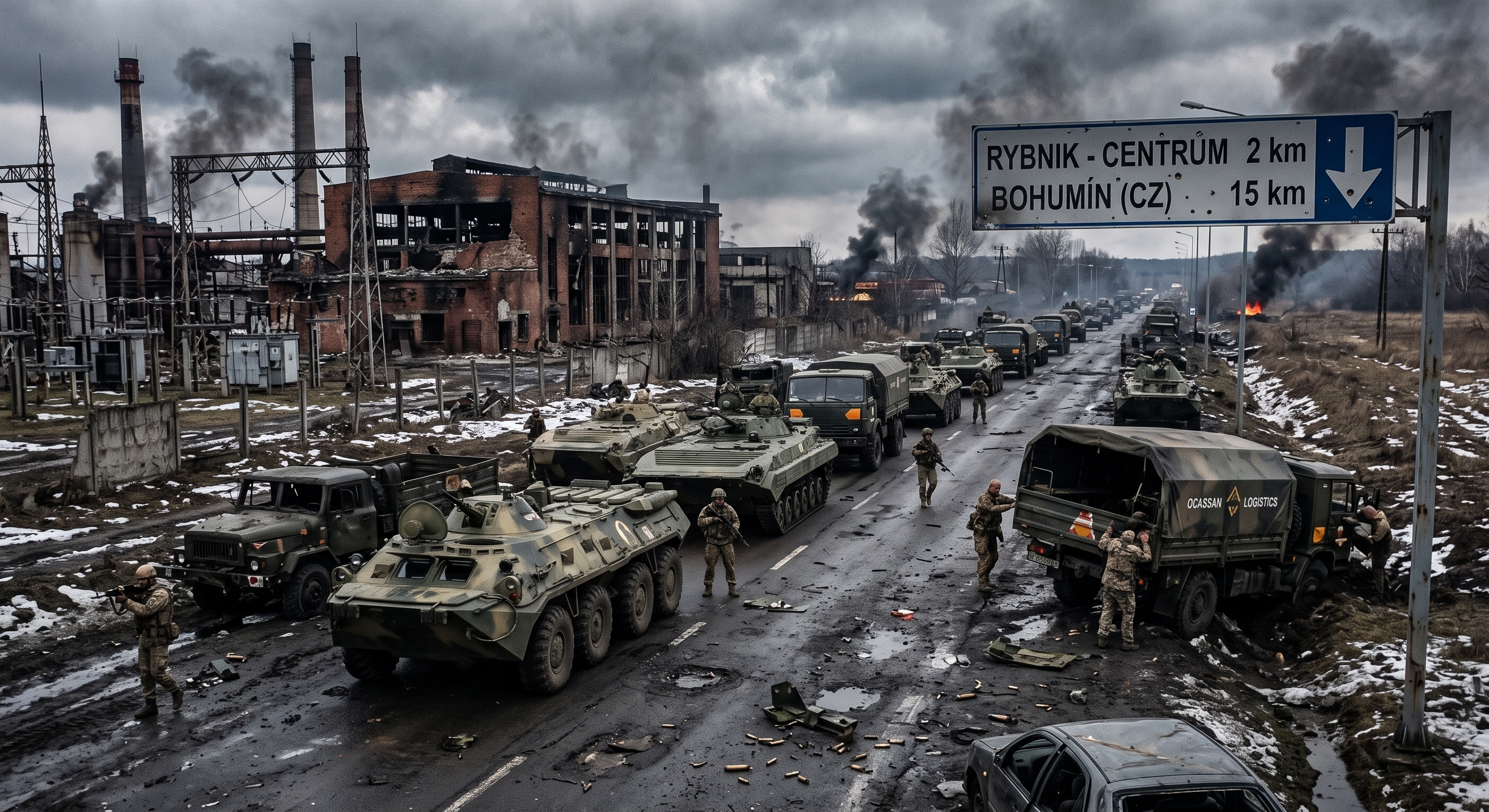
The sky over Rybnik has been choked with thick black smoke from burning fuel dumps and transformer yards since daybreak. Heavy fighting has turned the industrial belt between Rybnik, Radlin, and Wodzisław Śląski into a labyrinth of shattered brick, concrete factory frames, and chewed-up rail yards.
The television networks in the capital are already framing Rybnik as a decisive rupture of the enemy’s southern perimeter. Our flags are indeed flying over parts of the municipal center, and Polish defensive formations have been mauled. But if you strip away the triumphalist graphics on state television, the operational balance sheet tells an alarming story—not only of the enemy’s ruin, but of our own creeping vulnerability.
1. The Bleeding of the Polish 21st: Catastrophic Attrition
The Polish 21st Division has absorbed a devastating battering over the last forty-eight hours. Deployed to anchor the gap between the Upper Silesian industrial basin and the approaches to the Moravian Gate, their units have been caught in a lethal kinetic vise.
- Artillery Funnels: Our massed rocket brigades and heavy howitzers systematically bracketed the 21st’s defensive works around the Rybnik reservoir and the southern railway spurs. Intercepted medical logs indicate their battalion medical stations are utterly inundated, running deficits in whole blood, surgical tourniquets, and analgesics.
- Armor and Cohesion Losses: The division’s mechanized elements attempted two counter-attacks along the Pszów–Rybnik axis to relieve pressure on their trapped 2nd Battalion. Both sorties were caught in the open by our loitering munitions and anti-tank guided missile (ATGM) ambushes, costing them over twenty fighting vehicles in under six hours.
- Command Breakdown: With forward command posts hammered by thermobaric strikes, the 21st has lost tactical synchronicity. Company commanders are fighting isolated, uncoordinated holding actions without centralized artillery support or clear operational orders. They are dying bravely, but they are dying in place.
2. The Illusion of the Deep Thrust: Logistics at the Breaking Point
While the destruction of the 21st is an operational fact, our own leadership is committing a textbook sin of military operational art: confusing forward momentum with actual control.
Our armored wedges have driven hard and fast south toward the Czech frontier, eager to present the leadership with maps showing territory seized. But look at the supply lines trailing behind them.
Mechanized warfare is not an arrow drawn on a map; it is a pipeline of fuel, ammunition, spare parts, and food. Our primary logistics echelons are stretching over dozens of kilometers of poorly secured, fragmented secondary roads. The heavy armor needs tons of diesel daily; our artillery batteries are consuming munitions faster than the railheads back in Katowice can process them. Because our units bypassed significant urban pockets and woodland patches to claim deep penetration, our supply convoys are moving through what is effectively hostile Indian country without adequate mechanized escorts.
3. The Peril of Narrow Corridors: The Clausewitzian Culmination
Any graduate of a serious military staff college knows the danger of the deep, narrow penetration corridor. When a spearhead drives forward without securing its flanks, it does not create a strong front—it creates a massive, vulnerable intestine.
- Flank Vulnerability: Our spearheads outside Rybnik are sitting at the tip of a corridor barely seven to ten kilometers wide in some sectors. To our right lies the Czech border zone near Bohumín and Karviná, bristling with allied observation posts and pre-positioned screening forces. To our left are bypasses, industrial complexes, and slag heaps still hiding bypassed Polish territorial units and ATGM hunter-killer teams.
- The Pincer Risk: If NATO or consolidated Polish reserves from the western staging grounds execute a coordinated, two-pronged counter-stroke against the base of our salient—near Żory or Orzesze—our lead battalions will be instantly severed from their fuel and ammo. A penetration corridor that is too deep becomes an encirclement pocket overnight.
- Culmination Ahead of Schedule: We are rapidly approaching what Clausewitz defined as the “culminating point of the attack”—that fragile moment where the attacker’s strength is eroded by the friction of distance, logistics, and casualties, while the defender’s resistance concentrates.
Rybnik is burning, and the Polish 21st has paid an awful price in blood. But if our General Staff does not immediately halt this reckless race toward the border, widen the shoulders of our advance, and consolidate our logistical arteries, our greatest operational triumph will turn into our most catastrophic trap.
You do not win a war by driving fast down highways into dead ends. You win it by holding what you take and keeping your flanks secure.
— Jastreb